
Saving the local environment. Prevail Bank collects & shreds 14.5 tons of paper.
Prevail Bank is a community bank that takes seriously its vision to make a lasting, meaningful, and positive impact. This year, as a result of Prevail’s free community shred days held at each of its nine branches, nearly 14.5 tons of paper (28,958 lbs.) was collected and shredded, saving 246 trees. “Sustainability and building a better tomorrow for our customers and the next generation are important to us,” said Nathan Quinnell, Prevail Bank President. “Working together to pursue what’s possible is what

Rocket Industrial Achieves ISO 9001 Quality Management Systems Certification (QMS) From NSF
ISO 9001 certification demonstrates Rocket Industrial’s commitment to quality.Wausau, WI, October XX, 2026 – Rocket Industrial has achieved ISO 9001 Quality Management Systems certification from NSF, whose mission is to protect and advance public health. This NSF International Strategic Registrations (NSF-ISR) standard helps organizations reliably meet the needs of clients in both the delivery and continuous improvement of products and services.For more than 65 years, Rocket Industrial has helped
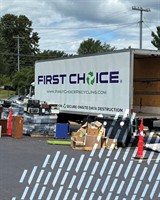
Prevail Bank Helps Divert Nearly 20 Tons of Electronic Waste from Landfills Through Community E-Cycling Events
Prevail Bank is proud to announce the successful collection of 39,518 pounds (19.7 tons) of electronic waste through its free community E-cycling events held throughout its service area from June through early September 2026. The total amount collected is equivalent to the weight of nearly nine midsize pickup trucks, demonstrating the significant impact local communities can make when given convenient opportunities to recycle responsibly. "At Prevail Bank, giving back to our communities means
Why Sauk Prairie Small Businesses Need More Than a Social Media Profile
Small businesses can build real brand awareness and loyal customers without a massive advertising budget — but creativity alone won't carry you. In Sauk Prairie, where businesses serve a close-knit riverway community, the difference between getting noticed and being overlooked usually comes down to one thing: showing up consistently with a clear strategy behind the effort.The Tool Most Businesses Skip: A Written Plan If you run your marketing by instinct — posting when something feels timely, trying a
The Core Setup Investments That Help Young Businesses Thrive
Launching a business in the Sauk Prairie area is an exciting leap—but also one that rewards owners who invest intentionally in a few foundational areas. The most successful new businesses tend to share one theme: they allocate early resources toward stability, visibility, and operational clarity rather than reacting later when problems grow more expensive. This article covers: Foundational financial and operational systems Early customer visibility strategy Smart technology choices Document readiness
Rethinking Work: How Businesses Can Truly Embrace Remote and Flexible Schedules
Not too long ago, the idea of working from anywhere was a novelty—something for freelancers, consultants, or the lucky few with progressive bosses. Now, it’s clear that remote work and flexible schedules aren’t just passing trends. They’re fundamental shifts in how we approach productivity, work-life balance, and even the way we define success. But while many companies have accepted the idea in theory, the real challenge is making it work—sustainably, equitably, and in a way that doesn’t leave employees
